Advancing the Future of Ultra-High-Q Nanomechanics
Tailored solutions to break scientific boundaries.
At QFactory, we develop nanomechanical resonators designed to achieve exceptional mechanical performance for quantum technologies and precision sensing.
Our devices are fabricated using ultra-thin dielectric membranes—typically high-stress silicon nitride—combined with advanced nanofabrication techniques developed through years of pioneering research at the Quantum Optomechanics Group at the Niels Bohr Institute, University of Copenhagen.
By combining engineered geometries with optimized material properties, we trap sounds in resonators leading to exceptionally low mechanical loss, ultra-high quality factors, and outstanding reproducibility.

The Science Behind Our Resonators
Mechanical resonators naturally lose energy as they vibrate. For many quantum and sensing applications, minimizing this energy loss is essential.
QFactory's resonators overcome this challenge through an innovative combination of material engineering and structural design.
Our resonators consist of a suspended mechanical element surrounded by a carefully engineered phononic crystal. This structure isolates the vibrating region from its supporting frame, dramatically reducing the transfer of vibrational energy to the environment.
The result is significantly lower mechanical dissipation compared to conventional membrane resonators.

Soft Clamping Technology
A defining feature of our devices is the use of soft clamping.
Rather than concentrating mechanical stress at rigid supports, our resonator geometry distributes the vibrational motion more smoothly throughout the structure. Combined with the tensile stress of the silicon nitride membrane, this greatly suppresses energy loss.
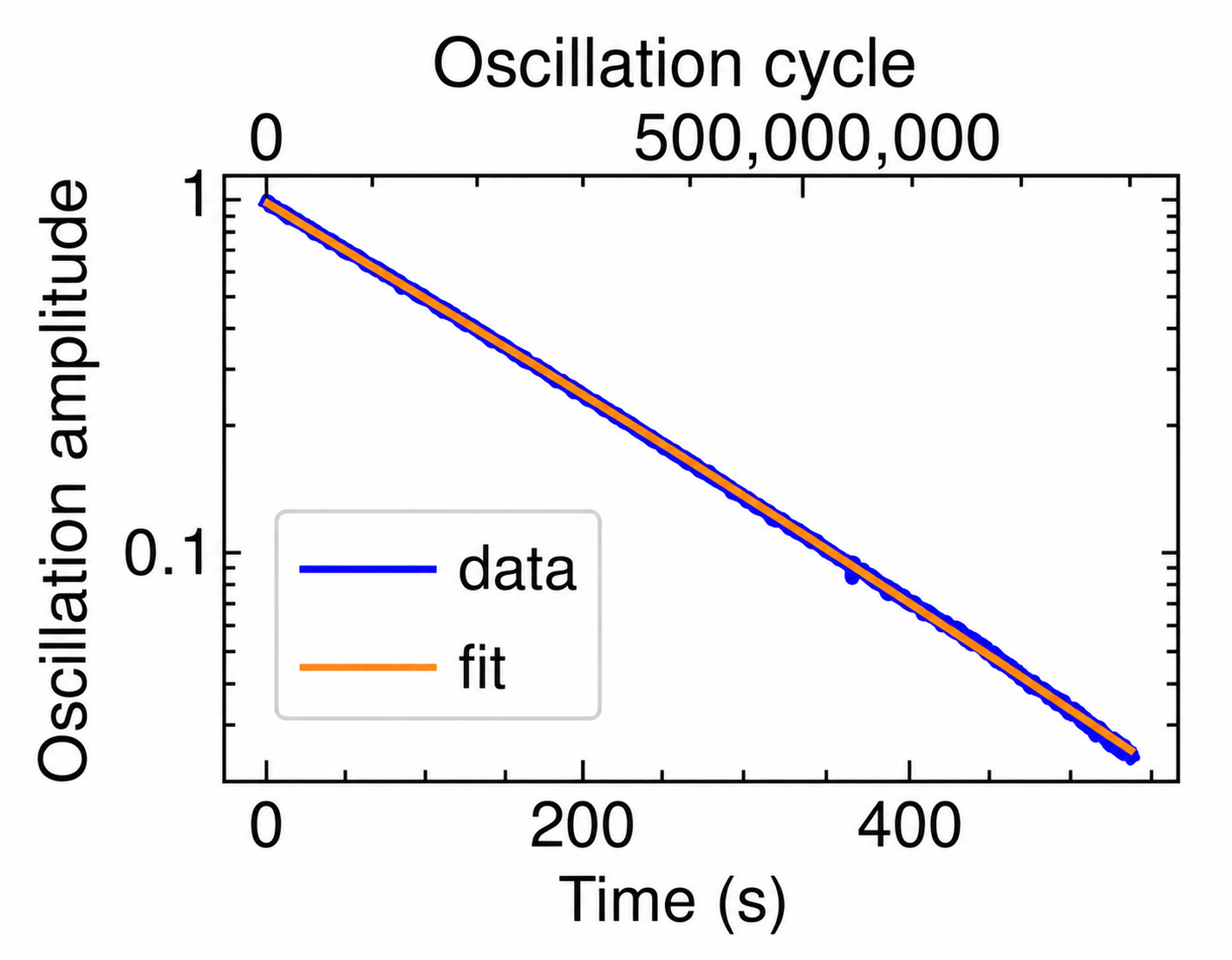
This soft clamping approach enables mechanical quality factors up to two orders of magnitude higher than conventional membrane resonators, providing a substantial performance advantage for demanding quantum experiments and precision measurements.
Why Quality Factor Matters
The mechanical quality factor (Q) determines how efficiently a resonator stores vibrational energy.
Higher quality factors enable:
Lower mechanical dissipation
Reduced thermal noise
Greater force sensitivity
Longer quantum coherence
Higher measurement precision
Improved device stability
These characteristics are fundamental for advancing quantum technologies and next-generation sensing systems.

Tailored Nanofabrication
Every QFactory resonator is manufactured using advanced nanofabrication processes refined through years of experimental research.
Our development process combines:
Precision nanofabrication
Numerical simulation and optimization
Phononic crystal engineering
Stress-engineered membrane design
Comprehensive device characterization
This integrated approach ensures exceptional consistency, reliability, and performance across every resonator we produce.
Applications and Enabling Tomorrow's Quantum Technologies
Our technology enables researchers and technology developers working across a wide range of emerging fields, including:
Quantum sensing
Classical sensing
Quantum optomechanics
Quantum electromechanics
Quantum memories
Force and displacement sensing
Low-noise precision measurement
As quantum systems continue to become more sophisticated, the demand for mechanical resonators with higher performance continues to grow.
QFactory remains committed to advancing the state of the art through continuous innovation in design, fabrication, and engineering—developing nanomechanical technologies that enable the next generation of scientific discovery.